

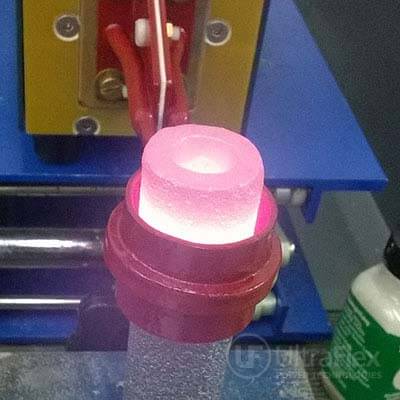
Generating Plasma with Induction Heating
To generate plasma, we apply an electrical field to a gas, with the goal of removing electrons from their orbit around the nuclei. These free-flowing electrons give the plasma key properties, including its electrical conductivity, magnetic field, and sensitivity to external electromagnetic fields.


Plasma is characterized as an electrically neutral medium of unbound positive and negative particles, with an overall charge of roughly zero. Like a gas, plasma has no defined shape unless enclosed in a container. To generate plasma, we apply an electrical field to a gas, with the goal of removing electrons from their orbit around the nuclei. This creates a mix of ions and free-flowing electrons, which give the plasma key properties, including its electrical conductivity, a magnetic field, and sensitivity to external electromagnetic fields.
A key requirement for producing and sustaining plasma, is continued energy input. Induction is an ideal means of providing that continuous energy input for plasma generation. Some typical industrial applications for plasma include:
- Plasma welding
- Metal cutting
- Surface treatments (plasma spray coating)
- Etching in micro-electronics

Fill out our Application Evaluation Form to get started! By providing detailed information about your specific requirements, our team of experts can evaluate and recommend the best induction heating solutions tailored to your needs. This complimentary service includes an analysis and customized solutions to optimize your industrial process.
